[00:00:05] Speaker A: Three, two, red one.
[00:00:12] Speaker B: So thank you so much for coming out to this stop on the Key Code Media post nab roadshow. This is our 25th year in business and yes, you can applaud for that as well.
And our crack marketing team headed by Matt McLean and then of course Mike Cavanaugh have been able to put this together every year for many years. So thank you for being here. And you know, this has been attended so well that every city we've broken attendance records. So thank you for being a part of that.
Yes, applaud again.
So we are in for a treat today.
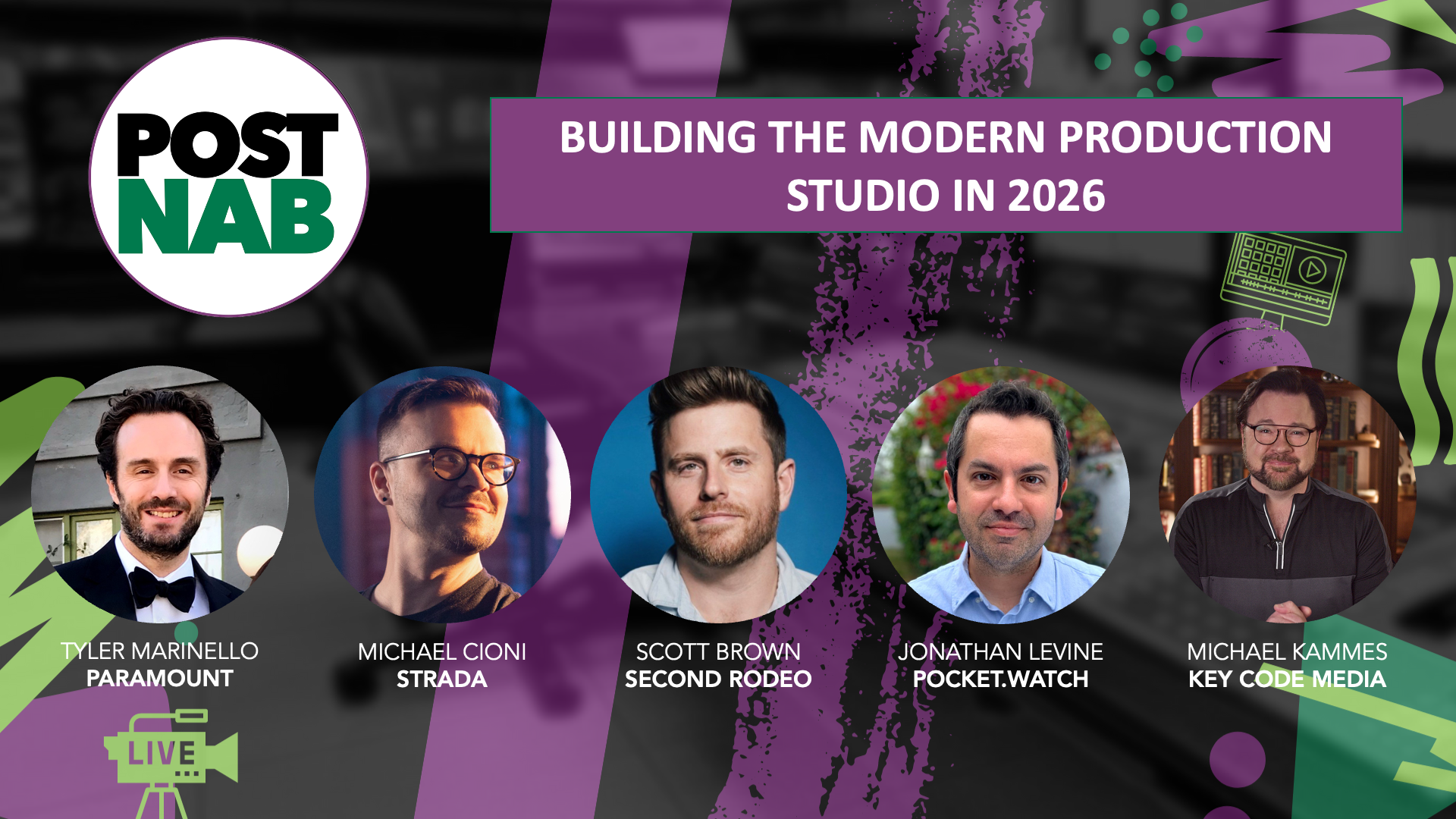
What we have here is building the modern production studio in 2026.
And we have a panel of esteemed guests and rather than me try and encapsulate what they do or read a LinkedIn bio, I thought I'd just ask each person to introduce themselves and why don't we start with Tyler?
[00:01:04] Speaker C: Hi everybody. Thanks to Key Code for the invitation. My name is Tyler Marinello. I'm the senior director of production technologies.
I am the production and tech lead over the facilities that we have at 1550 and Broadway in New York, 330 Commerce in Nashville, 1575 North Gower in Hollywood, and the Nickelodeon animation studio in Burbank that's covering everything from social media, digital, digital first or digital extension, all the way to long form episodic features for OTT and now immersive.
[00:01:43] Speaker D: Thank you, Michael.
[00:01:44] Speaker A: Hi, I'm Michael Cioni. I'm a serial entrepreneur, built a couple of businesses and scaled and grew them in the post production and production spaces. And most recently, which is really exciting and I think it ties into our conversation. I rebought my old post house light iron last Friday. And so this is all about. Thank you.
This is all about the story of keeping things alive that we desperately need to. But in order to do that, we have to be actionable. We got to be action oriented to do that. So I think we'll talk about how that applies into the subject today.
[00:02:18] Speaker B: Exciting. Fantastic. Michael Scott.
[00:02:21] Speaker D: Hey everyone, my name is Scott Brown. I'm the CEO and founder of Secondarity Productions. Some highlights. I've always worked at the intersection of legacy and digital entertainment. I relaunched Larry King's talk show actually with John years ago. I was the executive producer on Dwayne the Rock Johnson's YouTube channel from launch and.
And I also worked for Mr. Beast in 2023 into two of his biggest stunts.
When I came back from working for Mr. Beast, I was hell bent on figuring out the scripted portion of my career doing a lot more of that. And that's what led me to discover micro dramas, also known as verticals. And what Secondary has done is we've become a leader in making micro dramas, but doing them in an elevated way. A lot of them tend to be with these really soapy, sometimes cheesy, cringy things. We've really endeavored to make them in a much more elevated way that bigger, more notable names can get excited by. And. And we're building that out for other scripted digital formats.
[00:03:12] Speaker B: And last but certainly not least, Jonathan.
[00:03:15] Speaker E: Hey, everybody. My name is Jonathan Levine. I am the SVP of production and studio operations at Pocket Watch.
What Pocket Watch does is we work with some of the biggest creators in the digital space and sort of take them from YouTube and put them all everywhere, everywhere else, from big streamers to big networks.
This sort of. There's two pathways that we do this. One is we take their content and we will repackage it, and we call TV Ready compilations, where we'll cure it and make it sort of palatable and make it past QC on all these other network platforms. The other way is we work with them to figure out what is the premium expression of their brand. And we did this on Nickelodeon with Ryan's Mystery Playdate. We've done this with a creator called Kids Diana Show. Create an animated series with her. We've done musicals. We've done 2D, CG. Unreal.
Working with these creators and sort of figuring out why are they so popular and honoring their audience and figuring out what is the big expression, premium expression of them.
[00:04:16] Speaker B: Thank you very much, gentlemen, for being up here. Why don't we start kind of at a high level and we'll get down from there. When you're thinking about building a modern production studio in 2026, what's kind of the first thing that you're looking at to facilitate something like that?
[00:04:32] Speaker C: I'll start.
So I'm an engineer by trade. I work with a lot of engineers that are smarter than me. And the first step is to surround yourself with the right people. Right.
But I think it doesn't really matter whether it's 2026 or 1986. The goal here is, what are you trying to do? And who is it for? And it all kind of stems from there. So if I'm trying to build a fully functional Death Star, to use a terrible analogy, if I'm trying to build a fully functional battle station, and I'm trying to build it for a YouTube creator that's. That is interested in Doing something at scale X versus I want to do something with the USC marching band, which is scale Y. I'm not going to build the same thing. So I think knowing what your baseline is is always the first question that I try to ask myself.
[00:05:19] Speaker A: I would say the number one foundation for building a new production and post production workspace is going to be more autonomy. What's changed in the creative services market is people tended to go to other vendors in order to provide services that they required. But now the creative professional on average is more multi hyphenate than it used to be. Right. That multi hyphenate starts to produce a little adverse reaction when there's this nickel and diming. Many of us got used to the nickel and diming of going to the service bureaus. Now that's kind of something they're like, I don't like that taste. They want to be more autonomous. So if you're building a new infrastructure, think about it sounds. It sounds contrarian, but think about how you can allow the customer to do more on their side of the fence and make sure that the stuff on your side of the fence has a distinct difference. And that way they feel good about being more autonomous and more control because the resources are there for them to do that. And then the stuff that they cannot do is this stuff that you do as a creative service provider. And I think that celebrating that autonomy is going to actually instill more value and trust in your brand versus trying to say, we're all, we can do it all for you. I actually think the people that say we're going to do it all, we're the one stop shop, they're the ones that are going to suffer the most because the customers are smarter and they're like, I don't need you to do it all. I can do quite a bit of it. So make sure you understand which slice of the pie you should own and. And which you should give away.
[00:06:53] Speaker C: I hate the term turnkey, by the way. It scares the hell out of me because it implies that you've got all the answers to questions that I haven't even asked you.
[00:07:01] Speaker D: Well, so you know, the way that I like to explain what we do is we're making scripted content in the key of digital. In the same way there's a major and a minor key and can have the same song in both those keys. There is a key of legacy traditional media and there's a key of digital media. And the audience, they might not be able to explain this, but they often know that the difference in those two keys. And I think that that philosophy can extend into how we make our content as well. And so the thing that I'm looking for are people who have an open mind that we can take the lessons of the incredible ways that Hollywood has codified things and implemented these technologies and transpose them into this new world that we can play in, that we can do amazing art in, that we can create incredibly viable product in.
And I'm just really, I'm looking for people who understand that and want to build in that mindset.
[00:07:51] Speaker E: We've kind of touched on it here. I think it is, you know, it's being nimble and being fast.
The demands are all over the place right now.
I feel like, you know, in our case, when we're working with a creator, we have to sort of figure out why they are so popular. In some cases, you know, if they're. If it's a family, maybe people tune in because it's like, oh, they. The audience wants to hang out with his family.
If it's because they're doing crazy stunts and challenges, then maybe they want to see more crazy stunts and challenges. So the crazy stunts and challenges maybe has a fancy floor show that we need a big studio for. We have to light it. We got to bring in a crew, we got to do the whole deal. If it's about hanging out with a family, then maybe it's something smaller, maybe it's something more intimate.
Sometimes if the personalities are larger than life. Is it an animated Show? Is it 2D? Is it CG?
Um, so I think sort of honoring the brand and understanding why it's popular, and then being able to provide whatever production resources you can to make the show happen.
[00:08:51] Speaker B: What I find really interesting is that I didn't hear AI once.
I didn't hear a technology acronym once.
Everything that was said was all about the business relationship with the client and the talent morphing into something that's been kind of a mainstay the same way we're doing it for a long time.
[00:09:11] Speaker E: So.
[00:09:12] Speaker B: So kudos for. For not falling down the tech rabbit hole.
I did also want to ask about what kind of trends are you seeing that have the biggest impact on the type of content that you and your teams are making?
[00:09:26] Speaker D: Well, I just think that the micro drama moment that we're in is because, like, I have this theory that whether. Whatever, however we feel about it, TikTok and YouTube shorts and these short form content has habituated many audiences minds into wanting entertainment immediately. Once they start to engage with it and consistently about every single minute. And however nascent these formats are, I think that's what microdramas deliver on, is that the moment you start watching one of these things, you are in the middle of conflict, you are in the middle of story, and it is delivering it to you every single minute.
And now we are. What I'm really excited about is the proliferation of other digitally native scripted formats out in the ecosystem. So, for example, they're not new, but if you look at the Dhar Mann's of the World, Alan chickenshow, Chit, the Group Chat, Brooklyn Coffee Shop, there are scripted channels exploding on every platform that people are watching because they want to know what happens to these characters in the story, not necessarily the creators behind them. Yes, sometimes that's true, but more and more, it's about the story and the characters. So I just think that we are going to see a continuing shift of audiences wanting to enjoy and ultimately pay for stories that are digitally native.
[00:10:40] Speaker E: And I think on that same note, I think, you know, studios are scared by this. And Pocket Watch has been banging this drum for nine years about if it wins on YouTube, it will win probably everywhere.
And now you're starting to see, you know, we did Creators collection with Disney. We're doing a show, a variety show with creators on Hulu called rabbit hole. Premieres July 13th.
And they're starting to come to us. We get a lot of incoming now. We spent the last few years being like, no, these people this. There's an audience here. It's proven on YouTube, and it will. They will come and watch it here.
And so we're very. We're in a. We're a very happy space right now to do that.
And I think, again, it's just sort of being able to figure out how to take that audience, take that brand and give it on a bigger stage.
[00:11:29] Speaker A: Dovetailing on what Scott and Jonathan said. If you think about it, for this room, if some of the names that they just mentioned, you're not familiar with, that probably makes sense.
I wouldn't be discouraged that you're like, I don't know. Those channels, I've never heard of them. That's okay. What I think, to answer your question, but to dovetail on what they were saying, Michael, is that there's a hat that I've seen people wear that says make video horizontal. Again, you might have seen this hat. And if you're wearing it, I apologize, because it's ridiculous. Because what the hat is. A good example is the person that's wearing that hat, and I'm hopefully not seeing one in here and putting them on the spot, but at the risk of alienating them. The problem with the hat is, is that it says if you're wearing it, I don't care.
That consumer tastes can change.
And if we as creative professionals want to be able to always be successful, we have to accept the consumer tastes change. That's why the music you listen to when you grew up, you don't like the music today, and you wish it all sounded like that. Because consumer taste changes, fashion changes, art changes.
And so we don't get to decide what is good. And I think one of Hollywood's mistakes is when we stamp our name on something, we decide it's good. But we are not the buyer, we are not the consumer. And so it's important that if we respect the consumer taste change, anticipate that what we do is we apply our expert knowledge to the changing tastes. And that's what these new names that you're mentioning are simply serving a market that didn't exist before.
And instead of arguing whether or not it's good, good, we should argue how do we get involved and make it as good as it can be. And that's really how I find people in this room can be actioned. Make, make, make an impact on the changes.
[00:13:23] Speaker D: Well, I just want to add one thing.
Nothing about these emerging formats is antithetical to making great content you're enormously proud of. Like the two verticals that I directed, they're logistically movies. They're 99 minute stories.
Some of the best work I've made in my entire life. And I've had the opportunity to make independent projects like it is such a vibrantly exciting creative place. It's different than what we're used to. But you can do your best work in these. I guarantee it.
[00:13:51] Speaker B: So one thing I did want to point out is that obviously the storytelling has changed, but fundamentally the technology underpinnings are still production with production people. You still, if you're working in a facility, you have storage or cloud storage that's shared, you're still using an nle, you're still doing some color and audio work. So for fundamentally, the workflow hasn't changed. Some tools have been updated, but the under the technological underpinnings aren't all that different.
[00:14:17] Speaker C: No, and I think that's a salient point because at the end of the day, we're talking about an audience that finally had. Well, we're talking about products that exist where an audience already Was.
But the reality is that one of the trends that salient for the last, I don't know, 10 years or so is, especially on the engineering side, we have a long history of building the same thing over and over again. You laugh because you know it's true. But the reality is, is that as much noise as all of the AI products and product makers make, the idea is that they are trying to be disruptive in a way that they hope is successful. I would argue that they are not there yet as a, in a, in a gross manner. That's probably a point for later in the, in the talk. But the reality is, is that people on my side of the, of the business that are doing technical planning and technical build outs and then commissioning and then facilitating those things for creative professionals when they do get to work, you have to go into these things with an open mind. I, whenever I talk to a young engineer, I try to remind them, we get to do this. We don't have to change this build that we worked really hard on. We get to do something, we get to do it for these people and hopefully we get to, you know, be partners with them while we make whatever the next best thing is.
[00:15:29] Speaker E: Yeah, I still have to deliver stems and I still have to deliver proper color and I need an awesome sound mixer to do the animation that maybe the character was created from a original sketch and then turned into a CG character through AI.
You know, everybody who I work with, you know, we've been in this industry for 20, 30 years doing this, and now it's just a matter of figuring out, you know, how are these really incredibly popular formats? What are they? You know, is it a, is it actually, at its core it's a family drama? Is it actually, at its core, is it a game show? And it's like, how do you, how do you take the genres and the formats that you know and apply them to these incredibly popular formats? Because you're watching this content, it all feels familiar. Like, it's like none of this is so crazy new age whatever. Like, it all, it all feels like something that has come before and it's just the next iteration of it.
[00:16:19] Speaker D: Yeah, all these, all these processes and technologies that exist in the, in the, and television world and broadcasts are there because they actually are boon to making a better product. And there's nothing antithetical about these processes. In fact, I mean, I worked at Mr. Beast and I watched over the time I was there as it got more and more professionalized. They just signed with IATSE for Season three of Beast games like these, these professionalizations will come to this space. It's happening at a rapid pace. And I think that's really an opportunity
[00:16:47] Speaker B: and that's a fantastic point to bring up. And actually talking to this from a key code perspective. There's every generation of filmmakers has hungry. I'm going to do things different because I don't like the way it's been done, the institutionalized knowledge, how it's been done. And they do it their own way, but they realize it doesn't scale in the same way that they need. So there is that inevitable. Well, maybe there were some good things that were done before and maybe we should join at here. Maybe we should get shared storage. Maybe we all should decide how this workflow is going to be and not just islands of information. So I find. Go ahead.
[00:17:19] Speaker C: I was just going to say that the one thing that whenever we're regrouping after doing something and trying to figure out, hey, what do we just do? Do we do it well? What do we want back? How can we change it in the future without being really disruptive? If we had to start all over, what will we change entirely?
And in the spirit of that, I always say that the number one biggest detriment to any engineering team anywhere specific I'm broadcast engineer, but probably for any engineering team in any discipline is hubris. It doesn't really matter what it is you're trying to build or how you're trying to build it, but if you think that you have all the answers before you even start, you're finished.
[00:17:56] Speaker D: And what might have been discovered by these people that tried to do it, not knowing the right way to do it right. They probably. There's many things that they learned that, you know, are common knowledge, but maybe there is an opportunity. When I was at Beast, I was by any stretch at Mr. Beast. I was one of the oldest people there and, and you know, they're most of the things. Yeah, I think I, I like, I think what I brought there improved it. But there were a few things that they discovered kind of doing it on their own out in Greenville that I think have informed the way that I do things. And I think that's a really good point is humble yourself to that. Wisdom can come from anywhere.
[00:18:27] Speaker B: And I, I think Beast did do that. Like I said, I think normalize with shared storage workstations. They now have a post super and they have a pipeline for their production. So some of the, some of the asks are still crazy, but at least it's rinse repeat, crazy.
[00:18:41] Speaker D: Absolutely. Of course. It's all these systems are really smart and good and useful and they just need to be transposed into the processes that have been innovative in. I mean, YouTube is basically this odd place where people have figured things out, almost like by reverse engineering them. But how can we then apply the better systems and techniques to make them more professional?
[00:19:02] Speaker B: Since we are talking about technology and since we have 40 manufacturers over here talking about technology, what technologies are enabling what you can do in a modern product production studio in 2026? What kind of tech trends are happening now that you're able to capitalize on for the individual projects you and your teams have?
[00:19:22] Speaker C: I could talk about this for 15 minutes, but in no particular order, the one of the best things that came out of the pandemic, if there can be anything that could good that came out of the pandemic was that we finally as an industry wrapped our heads around the fact that we need to meet people where they are and make media as accessible to people where they are as possible. And tools like Frame IO and LucidLink have been leaders along that. And it seems like a lot of other manufacturers and service providers are catching up to that. That's definitely one.
I think the other thing is that the success of the sphere and the proliferation of the headsets from Google and Meta have both prompted a lot of ideating on how to make production for those platforms.
There's a long way to go to fully having a fully commercialized pipeline. But it's all, we talk about this at work, just, you know, in water cool star water cooler style conversations all the time. And the reality is, is that there isn't a, there isn't essentially a big book of how to make content for the Meta headset.
We're, we're working on, we're working on an immersive project right now and we're kind of writing the book for how we think we should make it. Now I'll be honest, we've made a lot of mistakes and the production teams have, are acknowledging that they are learning as they are doing. We are learning to fly the plane while we are building it is the analogy that we've been using. But the reality is, is that honestly this is kind of why we got into the business in the first place. This is cool.
Sorry.
[00:21:00] Speaker A: To Tyler and Scott's point, one of the things that's really critical that we do is as Michael, you mentioned, like there's all these tools that are all necessary and if you actually made a heat map of all the tools used on every production, I think you'd find it to be actually relatively clustered. People of all verticals tend to now kind of use the same cameras and the same post production tools. The same tools. They're not as disparate as they once were, certainly not across a wider array of different verticals of different parts of the market. They're all like, everybody uses Alexa now, Everybody, right. And so it's no longer just an exclusive product or an elusive product, but at the same time, the challenge is we have to know when to be willing to try something new. And sometimes we have this copy paste mentality that we get into this history, this rhythm.
Well, we just keep using the same tools we always used. And the problem with that, especially in post production, I think post production deserves the least, they deserve the most criticism for anchoring in and keeping things to stay the same. If you are in the production industry, you know that it is part of your job requirement to learn about new lighting rigs, new camera rigs and new lenses every single year. Entire new menu systems, entire new lighting configuration tools and DMX control, all that has to be redone. That community has created a society of open mindedness because they have to learn the new tools to do that. Sometimes in post production we don't have that same societal expectation. And we say, well, we've been doing this for 5, 10, 15, 20, 30, 40 years the same way, and we'll just keep doing it that way. There are people that we all probably know, none of you, of course, but there are people out there that literally are running old G5s on a version of an editing software because they go, I know it works and we're gonna keep it there. That is asinine, but it's true. They do that because they believe the pain of change is worse than the pain of staying the same. And they're wrong. And so what we have to do, and it's why key code exists I think, is like to help people shepherd through that pain of change and realize on the other side of this hill is everything you want, just open, open mind yourself and try something new. Instead of keep the copy paste mentality going through its cycle, the people that sort of escape that net end up discovering things. And to create a phrase that I think is, you didn't say it, but what I would say is you end up failing up.
And that becomes a really satisfying experience when you learn how to fail up. Because nobody's dead, nobody's gonna get fired, nothing's going to get deleted. But we're going to make mistakes, we're going to anticipate that and we're going to fail our way up to a sol. And the people that do that end up on the other side way better off than they were when they started.
[00:23:57] Speaker D: Oh yeah. I think failure is the great teacher. Right. And I think failure is an important part of success, especially if you're in and it's a cost you must pay to be innovative. Right.
You know, when I think of what I'm looking for because inevitably in the creator economy you wear many, many hats. And while I do direct and write, I'm also kind of in charge of building our systems. We don't have a post production supervisor yet, but we're approaching a scale, we might need that. So I'm looking for tools that bring more sophisticated workflows to us, but at the cost that we can have right now. Right now the average budget for a microdrama is going to sit in the low six figures range logistically to produce a feature film. You know, that's not all that much in terms of resources. So you know I've really. And they're not my sponsor but I really like what blackmagic is doing where you can, you can have interconnected computers and you can have different workstations and you can have, you know, a shared storage environment but you don't necessarily need as much infrastructure and equipment to do that. I also really tools that do a lot more like more multifaceted tools. Again I really like Resolve because I'm able to move from my editing to color to even sound sometimes. And the tools are all right there for us. So anything that allows my teams to be more sophisticated while still smartly using the resources that we currently have, I'm all about it.
[00:25:19] Speaker E: Yeah, it's funny on the pocket watch side, you know, one of our tools is we will take our creators content and we will cure it. We'll re review it, make sure it legally we have rights to the music, we have rights to all the images. And a lot of this content was produced by creators who they didn't save their files, they shot on their phone, they edited on their phone and they put it on YouTube. They have an MP4 that we can download and then maybe we have to then do figure out how to work with that. So a lot of the tools that we use and not to. And I guess I'm going to mention the AI letters now and hopefully keep everybody calm.
You know, it's like there's a tool out there that will let you create stems from a, you know, from a video. They'll break it out and then we can go back in and replace it with music that we have the rights to. So it's like it's tools like that that sort of let us retrofit content when we need to for distribution to, you know, platforms that require these things. Which is a great point about how, why haven't, why are these deliverables still the same deliverables that we've had for so many years? Why haven't they changed?
And so it's like any tool that sort of lets us kind of plus up and solve, like reverse Engineer, you know, post issues is really invaluable.
[00:26:31] Speaker C: Speaking only for myself here, I consider a editor to be a craft job, a creative job. And my ethos on this, not speaking for anybody else, but my ethos when it comes to AI and where all of my decision making and the guidance that I give to either my leadership or to my peers or to employees is does this supercharge an editor while they're working? If the answer is no or the answer is not sure, then maybe you go and look for something else that, that is, that is the, the number one statement across anything that we're trying to do. If there's a way that we can either give people more time back, more, more opportunities, more tools that can help them do their job better or faster, then I'm game. Show me what you got.
[00:27:15] Speaker B: That brings up a good point. So there's obviously the kind of upskilling you're talking about, but at least I find in post production scenarios, billable hours are much more scrutinized than maybe production. So how are we affecting the post production community and the management in post production workflows to say yes, experiment. It may take longer.
I want you to experiment first. You have to obviously hire someone that is curious and is willing to do that. You can't force someone. But how do we as an industry kind of suggest and allow experimentation without it being a deficit to what the deadline is?
[00:27:50] Speaker C: I think all four of us will probably say that it's a resource hog and it's challenging working for an enterprise.
We maybe have some resources that others might not have.
But finding power users to go and do this on top of their full time jobs, it's always a challenge.
I think the I can tell you the way that I approach it, the way I approach it is whether I'm working with you or for you or we just happen to ride the elevator together. I try to surround myself with people that share the same values, that have a lot of the same interests and frankly think that some of this stuff is cool. Right. Like if, if this is your job and also your hobby, we're probably going to be friends from there.
It's looking at families of tools. So just spitballing here, but the Adobe family of products, if the ar. If. The question is, is there something in here that can solve this problem that we're having? I don't know. Let's talk about it. Let's nose around, let's get in here knuckles deep and see what we can find out. And we take it as far as we can until the fire alarm goes off and we actually have to go real work, do real work again.
But that's, I don't know, in my experience, calling, calling for support from the manufacturer or even somebody from key code, you might be able to get help. But like, honestly, this isn't, there's no shortcut for this. You kind of have to get in there and figure it out.
[00:29:11] Speaker A: There's no free lunches and anything good is not going to come easy.
[00:29:14] Speaker B: We had free lunches today.
[00:29:16] Speaker D: Yeah.
[00:29:16] Speaker B: Didn't we?
[00:29:16] Speaker A: It was, ironically, there was today.
It wasn't free. Someone paid for it.
[00:29:22] Speaker E: Right, right.
[00:29:23] Speaker B: We call those mic bucks.
[00:29:24] Speaker A: That's right.
[00:29:25] Speaker E: That's right.
[00:29:25] Speaker B: Around the, around the gay.
[00:29:27] Speaker A: But ultimately what is required is it's a people business still, like, no matter what happens macroeconomically, we are still an in person people business. And we need that handshake in that conversation and those relationships in order to get us through those difficult times. That's why when people say, I don't go to events anymore, I can read everything on the Internet. My answer is always like, go ahead, read me, read me how you're going to really solve this problem with somebody's help. Right. You can't read that. You need to know who to call and you need to get their feedback. One of the things that's so great is there's so many people taking risks nowadays that they should only be two phone calls away. Everybody should only be two phone calls away. And given the macroeconomic climate that we're in, people are hungry to try new things maybe for the first time in a long time. That's an opportunity for us to take advantage of that. When they see somebody running a faster lap than them, it's like, well, what are they doing? That's allowing them to accelerate and that's an opportunity for us to reach out and communicate with them. So in person Experiences and relationships still dominates as the foundational component of anything that is going to yield good. And of course, if you hire the wrong people or collaborate with the wrong people, it is always an uphill battle. And that's not going to change either. When you bet on the wrong horse, you always lose. And if you do it cheap, you do it twice. And we all know that experience. And so it's important that we put on the pedestal good relationships, good people, good evaluations. And.
And again, one of the things that that key code and people like them offer is experience and access.
And experience and access are two of the fundamental components to be able to figure out adoption. And the last thing is, I think sometimes we think about changeover, meaning it has to be painted with a giant brush. It doesn't. What has always worked inside of any industry, inside of any technological change, is finding the right project to be a pilot. Just find a pilot and you get a pilot to try, I don't know, try not editing with Avid for once. See what the hell happens, you know, does it actually work right or whatever. Not shooting on Alexa for once, I'm poking fun because people go to those for good reasons. Those are great products and they're reliable. But there's alternatives that people simply have yet to explore in some circles. And once you explore it, you discover something new. And a pilot is an opportunity to try those new things. And I think what we can all be shepherds of is looking for the right combination of tools and talent and the right project to assign it to and just evaluate it and see what happens. One tiny, tiny quick story. The very first film that Sony was experimenting with, this is about 14 or 15 years ago. They knew that LED lighting was coming.
And Sony said, we're going to make one feature film that the DP has to accept. You can only light this with LEDs. And they found a cinematographer to do it. The the movie was called Think Like a Man. It's a comedy. It wasn't something that was a massive risk for them to light this way. But they said you have to light this completely electronically.
And that was the rule. And that was Sony's way to experiment what a path towards LED lighting could yield. But the only way to do it was to make a rule and find a pilot and say, you have to do it this way. And they lit that entire film with LEDs, which today is normalized thanks to pioneers like that film a decade and a half ago. And that's just one cool example that very few people know that we were under deep scrutiny, what do dark skin tones look like under LED lighting? Is this going to photographically look the same, better or worse? And those are the types of people that I always love to work with that are willing to take those risks and fail up.
[00:33:14] Speaker D: You know, in my career, mostly in the creator economy, my ultimate boss has been the algorithm, whether it be for YouTube or another social platform. And these algorithms, while they're not perfect, are ultimately a measure of people's attention, and they are very honest in their ways, especially when you make a lot of content and you see what's happening in the aggregate.
And I think that experience of having really this close relationship to the audience through data has emboldened me, as now I find myself in a leader position to, in a healthy way of a conversation with, you know, the people that we partner with, the people who buy our shows and provide the resources to make them, just to have some time for innovation. Because innovation, time and time again, the algorithm has taught me that innovation is really where success lies.
And in the microdrama space specifically, you'll often have people wanting to turn a film around, a movie, basically 90 minutes of content around in two, three weeks that includes color and sound. And I'm just like, well, cool. We're not going to do that. We're going to do a little bit more time. I promise you it'll be worth it. And I just apply that conviction. And it makes the moment of closing the deal a little more anxious, but it pays off in such big ways. And so for me, it's about, for the leaders in this room, getting your people time to have the ability to innovate and take risks and fail in the best way possible.
[00:34:37] Speaker E: Yeah, it's. Yeah, well said. I think it's. Yeah, experimentation is important, but as we all know, it's like we have deadlines we have to hit, we got to hit those deadlines. And so I've often found that, you know, when your back is against the wall trying to figure out how to make this work, trying to hit that deadline, and you're sort of desperate for a solution and you try something, it can be that's your moment of innovation. It's like leaning in in those moments and maybe you lean back on something you tried years ago or something you've heard about.
So it's very tricky to bake in innovation time. We've tried to do, like, think tanks and tried to do like a weekly brainstorm about things, and let's try this and that. But in the end, we have a product we have to deliver. We have things we have to edit, we, things we have to shoot. We have a, we have a something, an air date.
But most of our innovation has come in trying to solve solutions where, you know, we couldn't split the Sims out or where we didn't, we didn't have a layered file. And we have chats going, comments going up the side of the video, like, I don't know what these people are saying, how do we get rid of that? What are we going to do with that?
And I think that's when you need to sort of be nimble and be loose and be willing to try things and to hit that deadline.
[00:35:53] Speaker B: I'm glad you brought up the word innovation because often it gets tossed around and I think a lot of us have had this conversation where there's iterative and then there's innovation. A lot of people conflate those and think, oh, it's rendering faster, the drives are faster. That's innovation. No, that's iteration. Right, that's going to happen.
So with all the innovation that has come in the past few years, what problems still aren't solved from a technological perspective? What still has not been solved by this massive, I don't want to say glut of innovation, but this massive technological push over the past couple of years, what is still outstanding?
[00:36:26] Speaker C: Timely review and approvals that.
[00:36:29] Speaker B: You know what, that's a great point. And I, and I would argue, and I would argue that it's because we rely too much on asynchronous review and approve. I think if we did things live instead of waiting for someone, it would go quicker. But that's me.
[00:36:50] Speaker E: I still need humans even when I have AI stuff. How about that? That's interesting, right?
You know, one of the, as I said, like, you know, saying that's a problem.
Well, it's a, it is a good problem to have because it's like we, everybody keeps coming to me. My bosses come to me and they say, like, can we find a tool that will analyze a video and tell us if there's products in it, if there's too much candy in it, if it's over commercialized?
And the answer is no. You need a human, you need an attorney, you need a producer, you need somebody to spend the time looking at these things.
And I'm not sure. And that's part of like what makes our products good. It's informed people having very, you know, dedicated conversations about the quality of the content. You know, we're not putting out garbage because we want it, it goes through a certain amount of qc, a certain amount of curing, certain amount of S and P.
So I guess this is a good problem that I have and I want to keep it this way.
[00:37:55] Speaker D: I would just like to see more innovation happen when it comes to the audience's ability to give, you know, the right kinds of feedback in both the aggregate and the specific. Right. Like, I think that being able to, and I don't. I can't care about every comment that I read on in a digital medium, but have being able to see the trends that might happen in the comments section, being able to see the retention data that comes from, you know, the YouTube data that you get on the back end. These have been really useful tools and I would like to see more of those tools that help us truly understand the audience and what the audience wants so we can meet them where they are. Right. I think that's one of the things that that's happening, and not just micro dramas, but like YouTube and the digital revolution that's happening in general is it's a group of people who are willing to meet the audience where they are. And the more that we can understand where they are, the better we can entertain and make it a better business for everyone.
[00:38:47] Speaker A: Michael, the more I think about your question, the less I can actually think of a tactile product that doesn't exist. That's sort of the paradox of the question is we've invented so many great tools that everything on my head just keeps coming back to the individual behavior being the missing link or the problem.
And so it's a behavioral delta, not a technological one, and we have to deal with those ad hoc because they aren't unilaterally the same. But I think if there is a unilateral criticism of a technology, it is that we don't change our behaviors quickly, as quickly as the tech itself itself is capable of changing.
[00:39:30] Speaker B: I'd agree with that. And I think that's also goes hand in hand with inventing a product and that doesn't have a problem yet.
[00:39:38] Speaker E: Right.
[00:39:39] Speaker B: So it almost, it almost becomes a. I'm kind of numb to all this new technology and something that I'm told I should be using. But it, I can't see how this works for me, and it becomes just overwhelming.
[00:39:48] Speaker A: I'll tell you an example. Sorry, I'll tell you an example of a check that I think people think exists but doesn't.
I think people think there actually is AI editing out there and it actually isn't there and we're all looking for it. And if you're an editor, you're constantly trying to see if it's real. If you're a producer, maybe you want it and maybe if you're an editor, you're afraid of it. But it isn't there. And it's really interesting.
There are elements that can help accelerate or you said supercharge an edit experience.
But I actually think what's really interesting statistically is if you look at YouTube, TikTok, Instagram and social media platforms like that, they are overwhelmingly 99.9 with 11 nines after it. Percent nonfiction.
There is very little fiction coming through what we call the creator economy. Not zero, but certainly it's a rounding error.
And what I think is really important for us to realize as creative professionals in this industry is I think the most complicated thing in the world to make is the Super Bowl. I don't think anything's harder than the Super Bowl. That is a very complicated production. That is probably the hardest thing.
[00:41:03] Speaker C: But maybe the NBA Finals. But that's.
[00:41:05] Speaker E: We're splitting hairs here.
[00:41:07] Speaker A: But we're talking about very, very, you know, an important live event is extremely complex. But right under that, in my opinion, is any good narrative production. They are so insanely complex.
And that's partially why if you want high quality narrative so that people suspend disbelief and laugh, cry and feel for these people at the level that we've been able to achieve for a century plus, then the bar for that is got to stay high. Or people don't laugh, cry and feel like these, these people. When you binge watch a show, you know this, you feel like you kind of know them and you miss them. That is really hard to do. Our industry is the only industry that was capable of creating the suspension of disbelief that runs that far that you feel friends with the friends people, that's incredible. YouTube has a hard time getting that deep into people with nonfiction. It's not impossible, but it's not the same as fiction.
That's why I think it's important that from a technology stack we should lean more into the fiction stuff because it's hard and lean away from nonfiction because it's easy, easier. If YouTube is going to capitalize on the nonfiction stories the most in the game shows and the gamification, there is such a great audience for that. That's great. Let them have it. I think the mistake of a lot of studios is they're going to start moving into a space that is actually easily replicatable instead of concentrating on the stuff that's really, really difficult. We all are going to watch Christopher Nolan's new movie but before it comes out we're going to read article after article about how hard it was to create. You watch, that's what's going to be the narrative that's going to drive people theaters that this is so difficult to create. I've got to see what came out of the camera. That's what we are all about and that's what we've been trained and worked on to be able to achieve. And that's the type of productions we need to do more of that stretch us to our limits versus the types of productions that are a little bit easier and replicatable or you only need to be this tall to get that production to be done. That's not what Hollywood in its quotes like what Hollywood represents. It's not just a zip code, it's more than that. But Hollywood should always raise, try to be above that. And I think if we can do that, those are the technologies we should be leaning into that make that stuff possible. It also creates separation between, I can tell the difference between something I saw on YouTube and something I saw on a movie screen. If that difference goes away, then I would be more afraid about this industry as long as there's a delta in there, which isn't a criticism against YouTubers, it's that we have to be the Cadillac of the industry. We have to be the North Star and we got to hold ourselves to a higher standard than the rest.
[00:43:52] Speaker C: I, I, I finally thought of one thing that I wish existed that does not currently just to Michael's point, a lot of these, there's a lot more that we can do that is out there than you know, we could come up with things that don't exist. There is one thing that I wish there was more presence in the market for and that is making it easy, making it almost a transparent process for anyone anywhere. Whether it's on social digital, linear television, walking, walking through a restaurant and looking at TVs in a bar and knowing whether or not what you're watching is authentic.
Too many times family members of mine are confused because oh well, I saw this on online. It's like, well that that was AI or that was fake or that was Twitter and that comes with or grok or all the things that come with all that. And there are authenticity technologies that exist. Sony makes a full end to end thing and for things like news gathering operations, those are in service today.
They're not the ones that need it. I'm not saying they don't need it, but they're not among. They are among the people that need it. And I don't know what the path forward is that there will literally be able to tell whether this was made by AI, a deep fake, or something that is authentic and real and made by people. I don't know when we'll actually see that.
[00:45:24] Speaker D: But actually, if I may, I think the statement you said about narrative content three years ago would have been true three years ago.
But in 2025, the second highest grossing YouTuber after Mr. Beast was a YouTuber that made only narrative content, Dhar Mann. I actually believe that in, you know, YouTube just licensed the rights to exhibit the Oscars.
I think starting in 2029, that's a purposeful choice they made. I actually believe that in the next five years, one of the nominees for either best comedy or drama will first premiere on YouTube for the Emmys.
And, and, but you're, you're not wrong either. I think that the opportunity that is coming is there's really a great convergence that's happening where great content is gonna have a lot more options of where it needs to live. And I do believe that quality is a key ingredient for success, especially when it comes to narrative. But there is an explosion happening across digital on YouTube and TikTok and Instagram of digitally native scripted content. And what it needs are people like the people in this room that know how to make it better. And more and more creators who start on these platforms understand that they need more skilled people who are better storytellers than they are to really do what is a remarkably collaborative medium, which is the motion picture industry as a whole. And I just think that things are changing, but what endures is storytelling. And the tools and the craft that deliver great storytelling are only going to become more and more valuable.
[00:46:46] Speaker A: I agree. I just want to say that whether Dhar Mann or Markiplier or Mythical Morning, they make narrative content. That's not what I'm arguing that they, they don't do that. They can. They do. And I'm not saying whether it's good or bad. That's a different conversation. What I'm saying is, by the metrics, the overwhelming majority of creator economy material is nonfiction, and the overwhelming majority of Hollywood is and has been fiction. And that's. That's what the difference is. YouTube may be an exception. In fact, YouTube is the greatest place to distribute one's content, whatever it may be, and it is the most accessible.
But, but there is. But the percentage of the type of content Is, is what I was referring to.
[00:47:29] Speaker D: Oh, absolutely. And I think it's just going to keep changing. I just think, I just think it's going to keep getting better and it's good for people. We're in a tough time right now. Like I say this analogy, people talk a lot about the phoenix rising. They make a lot of noise about that. The phoenix has to burn down as well. It's a part of metamorphosis and growth. And I think right now we're just experiencing some burning, unfortunately.
[00:47:48] Speaker B: So I have one last question before we open it up to the audience. So briefly, Key Code Media doing this event in several cities, we've seen an explosion of students who are interested in getting into this, this industry, the industry that we love so much. So to those students, briefly, what would you tell them? What advice would you give them if they wanted to enter our industry very quickly?
[00:48:11] Speaker C: Number one, have outstanding written and verbal skills across the board. Doesn't matter what discipline you're interested in. You want to be a filmmaker, you want to be an editor, you want to be a prop master, Learn how to write cohesive sentences, period. No no's.
Number two, the number one thing that everyone told me when I was graduating college was go and network. NETWorking to a 22 year old is terrifying.
Nobody told me, I figured this out about 16 minutes ago.
Nobody told me that. Networking can be just keeping up with your friends that also want to do the same stuff and keeping up with them. Oh cool. You live in Austin, you live in Vegas, I live in la. We're all doing different stuff. Tell me about what you're doing that's still networking because guess what, that person knows people. The person in Vegas knows people that live in Austin. The person who lives in Austin knows people that live in la. And some point or another, if you're all doing similar types of things, you're going to end up crossing paths and that is networking.
[00:49:13] Speaker B: In fact, aren't weren't two of you roommates?
[00:49:16] Speaker E: We weren't roommates.
[00:49:17] Speaker D: We went to USC together though.
[00:49:19] Speaker E: Yeah, yeah.
[00:49:21] Speaker D: I would say that this is the most important. Well, first of all, make a micro drama like what a great opportunity that someone right out of film school probably, you know, maybe with a couple fibs, could be in the director's chair of a 90 minute story, you know, with a 150 grand behind him to do it. Right. That's a cool opportunity. But more importantly, I would say to students right now, there is this really unfortunate, I think some of the people that make this digital Content like a lot of the microdram apps, not all of them, but a lot of them. They, they have this message, they want to share that, like, quality is antithetical to what audiences want, that audiences are like, tired of quality.
That's nonsense.
Consumers are always going to want the product they love delivered at a better quality. I think the important thing is, you know, understand what modality your viewers are in.
Even if I can make the very best sushi in the world, if my customers want tacos that might not be super useful, just know what you're, what medium you're in and make the very best version of that. Quality, when strategically deployed, will always be a massive advantage.
[00:50:23] Speaker A: I think one of the challenges that I've witnessed quite a bit, I don't see a lot of students in this room, but I think we all probably know a few, is that they, they get tired of being somewhere really quickly and so they get a job or they get in a place and then they'll say, I've been here too long, I need to move somewhere else. And we're like, you just got here. And they're like, well, it's been 18 months. I'm like, 18 months, right? That's a long time. And if you actually think about it in their lifespan, 18 months is a larger percentage of time than our lifespan. So in their mind, it is a bigger portion of life.
But the problem is that some of these subject matter expert skills that are required need gestation time. And I've seen over the generations, people are less willing to stick it through the turbulence to get to the smooth air again. And I think they end up switching as soon as there's the first sign of conflict or rough air or rough road or something like that. So what we need to do as experienced people, is encourage them to stick it out a little bit longer, get past that, so that they can actually deepen those network ties, those roots. They can gain enough knowledge that you just can't get in 12, 18, 24 months. You need to really think about three to five years actually isn't that much longer. If you've been doing this a long time, you look back at three to five years is a short tour, but to them it seems like eternity because they've never been anywhere in their life for more than a couple of years. And so I think reminding them a sense of time to slow down instead of be so preoccupied with instant change and the adhd, I can't be still, sit still for so long. We need to encourage them to sit Still a little bit longer and actually take in some of the experiences they're getting innately.
[00:52:16] Speaker E: I tell them to do something else. No, just kidding.
No, I mean, everybody's kind of touched on. It's like, you know, know your audience and honor their expectations. I mean, then that can apply to if you're writing a spec script or if, you know, respect. What, what's the director looking for? What is this manager looking for? Is the industry looking for? If you're editing something, what is your director, what is your producer looking for?
I think it's, you know, you want to.
[00:52:42] Speaker D: People want to work with people who
[00:52:43] Speaker E: they can trust to deliver something that they expect, that they're asking you to. It's like in order to survive, you know, it's as an industry, as a business. And so, you know, if somebody comes to you and says, I want you to make me a romantic comedy and you and you deliver the best horror slasher gore fest you've ever made in your life, they're not going to come back again. You're going to, you're going to get a weird reputation. So know your audience, honor their expectations. And if you're a YouTube creator, if you're a creator making videos, you know, see what hits and then lean into that and keep making more of it.
[00:53:17] Speaker B: And now it's time to hear from you. So if you have a question, raise your hand and Mr. McLean will hand you the microphone.
[00:53:24] Speaker D: Thanks, Mr. McLean.
[00:53:27] Speaker A: So what role, if any, does you
[00:53:29] Speaker B: see virtual production playing in this with
[00:53:32] Speaker C: pop up walls, green screen, those types of things. Verticals. You see that, that playing a role still. I know the volumes aren't really happening, but smaller walls and green screen seems
[00:53:44] Speaker A: to be popping around.
[00:53:45] Speaker E: We did a entire pilot with a YouTube creator where we did it all in Unreal on the digital domain stage. We tracked the background when we did it. It was a little too expensive to keep doing it in the series, but now that's kind of changed, it's made easier. So it's like if, if the vision for the story, whether it's starring a YouTuber or a big film star, it's like if we need that, then yeah, let's, let's do that.
[00:54:10] Speaker D: I'll second volume. I think that's maybe a place where AI tools can be helpful, right? If they can speed up and lower the cost of building those worlds inside of Unreal or whatever tool it is.
[00:54:19] Speaker A: There is. Write this one down.
The production group behind House of David, they just did a new version that's called Moses starring Ben Kingsley. If you look for it, you can find a behind the scene.
And what they did is they used the LED volume for the background, but they used AI for the foreground and the production design. The people are real, the background's volume, but they spent no money on production design.
That is. And those are all the stuff that AI is really good at because it's not real. It's not really. It's just, it's just blurry in focus, you know, sort of elements. Look up the behind the scenes making of Moses and you'll see what I think is the best example of AI and volume together.
[00:55:07] Speaker C: I'm very bull on virtual production as a whole. We have two volumetric production studios right now. And the reality is, is that we want to make them as available as anybody within our ecosystem that wants to use them. But let's be clear, they're the defined pipelines for these are long, arduous, expensive, time consuming. And you know, one of the, to come back to this, I think innovations, not iterations, is we need to figure out how to square that circle a lot better.
Michael, I've seen you on panels before. You always, you know, a bucket full of information.
[00:55:52] Speaker A: But personally, I think video verticals suck.
[00:55:58] Speaker D: Why do you think that?
[00:56:00] Speaker A: We don't want to get into that. But my question is this.
What do you think plays, movies, TV videos would look like if we had two eyeballs in our forehead vertically placed?
You're talking about the aspect ratio itself.
Oh, well, I would say again, what I said at the beginning is consumer taste evolves. The number one reason, this is my opinion, the number one reason verticals are vertical is human physiology. It's simply because a phone fits in our hand this way. It's biological.
On how we view by holding. Not because our eyes aren't vertical, it's because our hand is. The phone is only shaped this way because of our hands. And if we had a thumb in a different place, it might be different. But it's hard to hold a phone like this. So the vertical, while I agree is harder to tell a story with two people in, isn't it is a consumer change in the taste and way people consume. But I will say when people want, and just think about this, when people want to dim the lights and make some popcorn and watch something as a family, it's not going to be a vertical on their phone. It is a different physical experience.
So verticals are not meant. I don't think you're going to see them replace appointment viewing experiences. They are replacing Time being consumed in areas or places where you don't have popcorn and lights and a family around.
[00:57:30] Speaker C: There's a reason why at the dessert counter there's cakes, there's pies and there's donuts.
Yeah, yeah.
[00:57:35] Speaker D: I mean, I think that when a film came out, we went and watched it in a theater, television. We brought our stories into our homes and now we're carrying our stories everywhere we go. And it's a different place for those stories to exist. And so the stories have to fit the modality of the view and experience.
[00:57:51] Speaker A: You're clearly not the ideal customer profile of a vertical. And that's fine. That's fine. That's totally fine. But there is an ICP for everything and it doesn't have to be all people. And that's totally cool.
[00:58:07] Speaker D: There's a question for. To all of you. There's a. In the recent years, a lot of people who used to work in, especially in Los Angeles, in the industry, lost jobs.
They have great knowledge, great experience, and a lot of them consider totally abandoning their profession and moving to something completely different. What would you tell them?
[00:58:34] Speaker C: Can I go first, please? I. I would. First and foremost, I. I feel that deeply for, for my community, for the people in the room, for everybody.
My wife is an artist. I've worked in television my entire career.
This is, this is the front page news in my household. This is the six o' clock news.
People in production have an inherent advantage over everybody else because nobody in this room knows how to say no when it comes to getting a job done. That is just the absolute truth. So if you are talking about, are there translatable skills working in production or post production to someone who's going to go work at a bank or for an insurance company? You're goddamn right there are. Number two, if, and I'm assuming that this is being broadcast internationally right now.
[00:59:19] Speaker B: Right, of course.
[00:59:20] Speaker D: Okay.
[00:59:20] Speaker B: Of course.
[00:59:23] Speaker C: There's a lot of people running for governor right now. Last time I checked, it's 61.
They all should have a good answer for why production is leaving Los Angeles and what it will take to bring it back.
[00:59:37] Speaker A: I think the good news is that we do have the talent here. The talent's here. But the truth is.
The truth is there. Will, this is the data. This isn't my opinion. The data suggests that the most amount of jobs ever booked in our industry was in 2019.
That will probably remain true forever. We will probably never have more jobs than we did in 2019.
And that's the data suggesting pretty reliably it's all a decay.
So what you have to decide is this industry is what I use the phrase, it's right sizing it over built, we overbuilt and we were able to enjoy the benefits of about 15 or 18 years of a zero interest rate. And the zero interest rate phenomenon allowed us to build and grow really fast, really hard. And now the zero interest rate is gone. It'll be gone for a long time. And so it's harder to borrow money. And when that happens, there's a domino effect. And that domino effect in our world is there'll be less production for forever.
So we have to decide do we want to be part of the community that is here after the right sizing is complete?
And many of us will be, we're like when the industry right sizes and it's the right size again, am I working here or should I do something else or leave town? And that's, everybody has to make that decision for themselves. But if my warning is if people are waiting for the jobs to come back to the capacity that existed in 2019, you won't, we won't get there. That's the reality. I know it's not good news, but that doesn't mean there isn't a future.
It just means that the amount of jobs that are available will never be higher than it was in 2019. And that is what we have to all individually decide what to do with that information.
[01:01:34] Speaker B: I think we have time.
[01:01:36] Speaker D: I would just say I, I, I, I've never, I don't know all this the people. But I will say, and I agree, I don't think we're going back to the past. But for me and what I see happening with the convergence of the creator economy and the larger entertainment industry, I have a lot of optimism and excitement because there's a lot of jobs out there. And those creators are more and more coming to Los Angeles to build because of the reasons that have caused Los Angeles always to be a place. And I don't know if it'll. I, I, I'm sure you're right. I don't think it'll ever be like it was. But I think that that doesn't mean the future isn't exciting. And I try to share that optimism.
[01:02:09] Speaker B: I think we have time for one more question Mark.
[01:02:12] Speaker C: Yes. My son is graduating high school this year and he's done multiple years of film class. What would be the one piece or one key piece of advice you would give him as he steps foot into the film TV industry?
[01:02:29] Speaker E: Go make. Has he go make something.
[01:02:31] Speaker D: Yeah, go make things. Just make things more than ever. Make things. You, you can put them out there into the world and making things as the best school.
[01:02:37] Speaker E: And he should edit it and he should direct it and he should write it and he should light it and he should do it all. He has multi everybody. He's a multi hyphenate. He can, you know, he can pivot and dance in the industry. Yeah.
[01:02:48] Speaker C: Also read the trades, learn about what's going on. I mean, deadlines written by a bunch of bots and interns. But at least you have an idea of who the players are, who the agencies are, who the management companies are, who the studios are, who the small studios that win all the awards are, all that stuff.
[01:03:03] Speaker B: And with that, I want to thank everyone up here today. Thank you so very much.
[01:03:07] Speaker D: You thank you.
[01:03:10] Speaker B: I want to thank you that have stayed, not just for this, but to keep our industry going. Thank you and to reward you. We have a happy hour going on, so make your way over, talk to our manufacturers and then when you have questions, come see us at kicode Media. Thank you again for coming out. Thanks for watching Broadcast to post. Don't forget to follow kicode Media on social and contact us about your
[email protected].