[00:00:00] Speaker A: Foreign.
[00:00:11] Speaker B: Everyone, thanks for joining us today. I know the traffic sucked, rain is weird, but we appreciate you being here this morning for this first panel at the Post NAB roadshow for Key Code Media.
Very briefly, if you don't know Keycode media, we've been systems integrators when. This is our 25th anniversary. It's been around 25 years.
Started out in LA, but we've had a Chicago presence for 15 years now. And I'm a regional son. I came from Chicago, actually graduated from Columbia, class of 01.
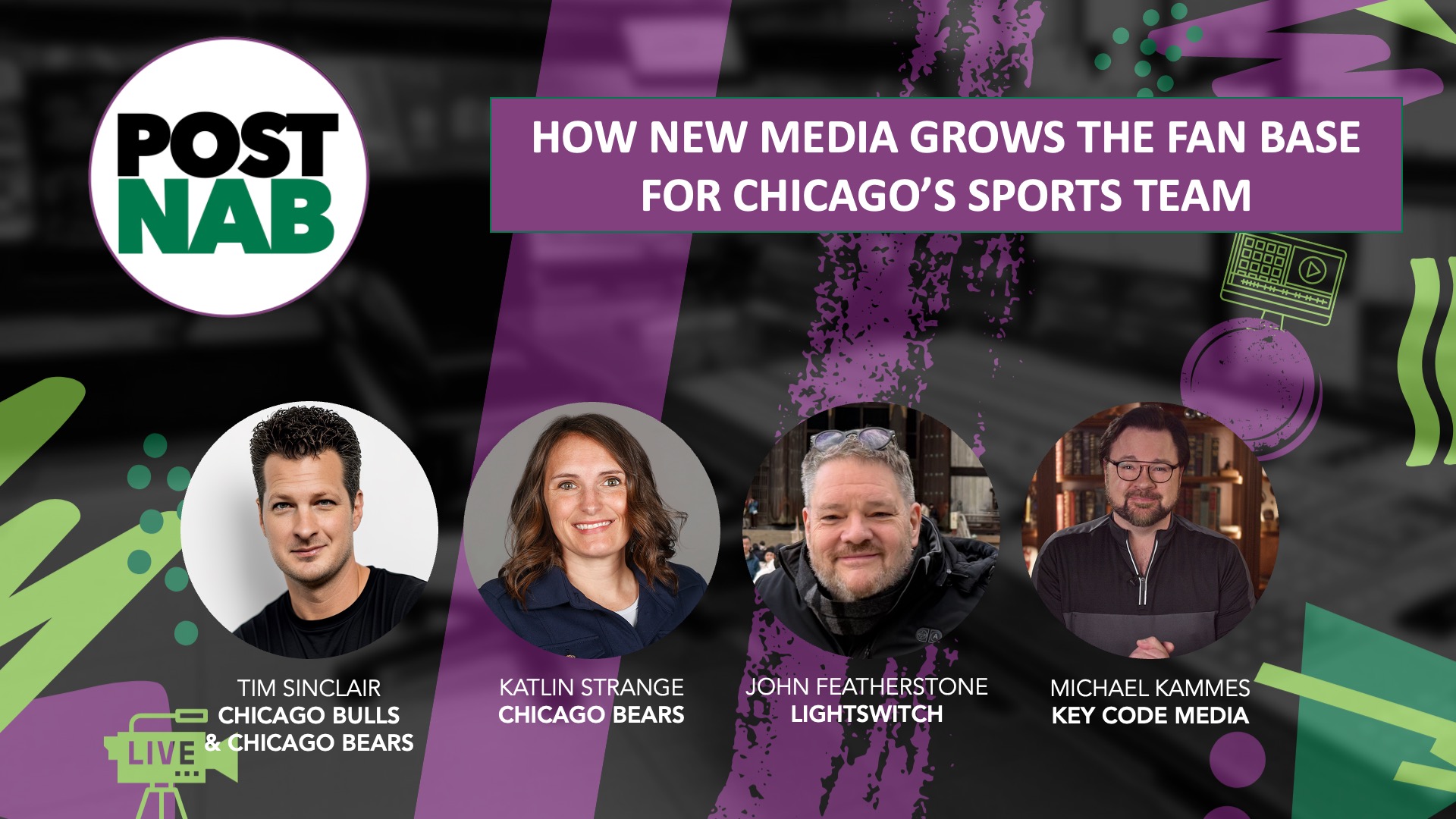
So I'd like to keep close ties with the school. So thank you so much for being here today. We have a stellar lineup of folks here today, and I'm gonna let them introduce themselves. So why don't we start first with John Featherstone. John, can you kind of give everyone some background on your skill set?
[00:00:57] Speaker C: Good morning, everybody. My name's John Featherstone. I'm one of the and principals and managing directors of Light Switch. We're a lighting and visual design practice. Again, despite the accent, proudly founded in Chicago.
We've grown since two of us working at our kitchen tables to a practice with eight offices worldwide and about 52 designers.
Support staff, draftspeople.
We specialize in a legacy of lighting design, but that's moved into a broader remit of lighting, video, and production design.
Everything from concert touring to themed environments to museums. Those of you who are in Chicago, we do a lot of work with the Chicago museums. We've just relit the U505 at the museum of Science and Industry. We do a lot of work with the Shed. We juxtapose that with a broad remit of concert touring work. At the moment, we're working with everybody from Marc Anthony to Hans Zimmer, which I didn't realize was alphabetical until Tim pointed it out to me the other day.
And what we do, though, in all of these diverse shows is we focus on helping people tell stories. Whether you're a concert performer, a Fortune 500 company, or a sports team, what is really important, we believe, is what's the story you're trying to tell? How do you identify that first? How do you craft a unique experience for that particular guest? And working with KIE Code to craft these kind of solutions which really deliver the story that the client wants with focus and accuracy.
[00:02:20] Speaker B: Thank you, John. I did want to ask folks, before we get to Caitlin and Tim, how many people here are interested in getting into sports production?
Yes. Okay. How many people are interested in getting behind the scenes and wearing glasses and Being nerdy and the kind of tech behind the production.
Yes.
[00:02:37] Speaker C: Okay. All right.
[00:02:38] Speaker B: Any esports folks out there?
[00:02:41] Speaker D: Yeah.
[00:02:42] Speaker C: Okay, sweet.
[00:02:42] Speaker B: We got a good cross section here, so. Okay, next we have Caitlin Strange and Caitlyn. You're with the Bears.
[00:02:49] Speaker A: I am with the Bears. The Bears. I'm your director of game presentation, so my team leads your fan experience. So think about anything that you're engaging with or interacting with when you show up on a game or even some of our fan events, we work alongside our production team, put on the show that you see on the video board and really create all of those elements that are not the playing on the field on a game day.
[00:03:12] Speaker B: Thank you. And last but certainly not least, we have Tim Sinclair. And Tim, tell us a little bit about yourself.
[00:03:19] Speaker D: I am the public address voice of the Chicago Bulls and Chicago Bears and Chicago Fire, Illinois basketball and a few other things. So if you've been in or around a sporting event in Chicago or the Midwest, you've probably heard my voice, though not voluntarily. It just happens I'm that guy.
And my job I boil down to saying I reflect what the crowd is or should be feeling in a given moment.
So during gameplay, I'm trying to follow what the crowd's already feeling or help lead them someplace, depending on what's happening in the game. And then we do announcements and player introductions and ladies and gentlemen, welcome to Soldier fee, all that kind of stuff. So that's my job.
[00:04:00] Speaker B: You know, everyone is just waiting for
[00:04:01] Speaker C: you to be on.
[00:04:05] Speaker D: It's generally, it's funny because everybody talks about the radio voice and turning that on and off and there is something to that. But also I try to be authentic and you just, it's just a little bit more sometimes when you don't have the face to face and that, the hand motions and body language, you have to do it all with your voice and you just talk from a slightly different spot.
[00:04:25] Speaker A: So.
[00:04:25] Speaker B: And how long have you been doing this, Jim?
[00:04:27] Speaker D: I've been with the Bear, the bull for six years. I've been with the fire. This is season 13 and. But I've really made it a full time, full time thing in the last six or seven years.
[00:04:38] Speaker B: I think I'd love to know how has your delivery and how you interact with fans for a greater fan experience. How has that changed over the years given the proliferation of shorter attention spans and mobile devices? How has your delivery changed?
[00:04:53] Speaker D: Yeah, I think I started kind of right at the beginning of some of that. So I, I didn't live necessarily the old days with no video boards. And it was literally just what was happening on the field.
And my voice, we. We've had all those things, but they've definitely evolved over the last 10 years. And so the fun part for me actually is getting to play off of those different elements, the ones that Caitlin and her team create or that they do with the bulls and interacting with the video board, interacting with the DJ or timing those things so that together they all make sense. It's not just me blazing a trail and letting everything else happen around me. It's knowing what's about to happen. If we're going to do a prompt on third down or fourth down, I've got my bear down, it's third down thing, but sometimes we have a player who's jumping in or we got a video board element that's going to happen. And so we have to make sure everybody's on the same page.
And. And that's fun. I enjoy being a small part of a bigger presentation than just feeling like I have to fill all that space myself because, one, I don't think that's what people want, and two, that's a pretty heavy weight to carry. So.
[00:06:00] Speaker B: And speaking of that, Caitlin, how. How was that planning and kind of sync process going on? Because I assume there's the run of show, what's going to happen and what's in the press or what's newsworthy at that point. So how are you orchestrating all that and deciding what. What's too much to do and what's not enough for the fan experience?
[00:06:19] Speaker A: You know, I think a long time ago I heard somebody tell me, in this industry, you have to be ready to fail and not be afraid to fail. And so a lot of it, like, it starts with these blue sky sessions, right? Like, that's our terminology. I sit down with my production team and we'll go over the year before real, honest feedback. What worked, what didn't work, what do we think our fans liked, what didn't they like? And then we just start planning and then week by week it changes. And a lot of it, you know, we just found something this in the season, and I think one of my favorite pieces of feedback is I didn't realize how much you and Tim talk to each other in the middle of the game because he's on a hot mic the entire time. But it really is to his point. What are the fans feeling? What are they doing? How is the game play affecting how they're feeling? And so it might be, hey, we just got a turnover. So now we're going back onto offense. So what we were really planning to have this high energy building into defensive TV timeout. We're talking changing. My control room is flipping to different pages and our Ross stuff to find that offensive break. Now we're shifting gears, and then it's flipping the entire rest of the script. Then you've got, unfortunately, injuries with players will then push or take an entire TV time out. So I'm shifting my entire script. So the reality is, in stadium, it's a live production. When you have broadcast, when you're on TV and you have the courtesy of that 5, 10 second delay, we don't. And so that's why Tim and I are constantly talking like, okay, going to do this, or, hey, we're going into a fourth down. I need you to add a little something more here to get the fans going, because they do react, they react. Not only do the graphics on a video board, but as soon as they hear Tim say stand up and shout, they're all of a sudden up on their feet. A lot more than just an animation on the video board. So the planning never stops. And the only way to get better is to constantly keep changing and moving. But I think the reality is you also have to be willing to take those chances and try to see what the fans will react to because it's. It might be the silliest thing, like, let me hear you scream in 3, 2, 1. And they'll scream versus something we talked about for three weeks, planning on a hype video. And they're like, okay, they're still in their seats. So that didn't hit.
[00:08:23] Speaker C: I'll do that again.
[00:08:24] Speaker A: Yeah, well, we'll scrub that from our run. A show. So it's interesting, but it's fun. It keeps you on your toes.
[00:08:29] Speaker D: Sports is the ultimate reality show to me, and you can't. I almost feel like you can't plan on anything, but you have to be ready for everything.
And you think you're gonna do this big thing coming up. And then there's an interception.
[00:08:41] Speaker A: Yes.
[00:08:42] Speaker D: Now that goes away and you're completely shifting gears to something else. So that makes her job incredibly difficult and mine fun, silly.
[00:08:51] Speaker C: Yeah. And we're working across a range of different kinds of production. I think it's safe to say that sports is absolutely the most dynamic seat of the pants. Not even in the moment, in the second. You know, we're doing a large corporate event in three weeks. We know what every second of that show's gonna be. Will there be the potential for a Crazy Ivan or a last minute change. Yes, but football especially is nothing but a whole series of crazy Ivans. You literally have no idea what's gonna happen in the next moment.
[00:09:16] Speaker B: John, I was really curious because we have the explosion of social media and look what I'm doing, verse. How can we increase the fan experience in that moment so it becomes memorable? How on earth do you find that kind of balance as to what's good for. This is good for marketing, this is good for pictures, this is good for social media versus I want this fan to be immersed in the moment.
[00:09:36] Speaker C: Yeah, that's a really interesting question. And it's kind of pivoted and a lot of this has changed. Post pand from the notion of, okay, it's game day, you've got an audience of 60,000. You've actually got simultaneously an audience of 60,000 and an audience of 60,000 one person events, if that makes sense. So it's finding that balance between the individual experience and the shared experience.
It's also for somebody that works in the visual field, really pivoted the way we think about individual capture. And what I mean by that is people capturing stuff for social media, capturing stuff on their phones.
I cannot count the number of times we've had a conversation with a performer, a player, an executive, where they whip out their phone and go, this doesn't look very good. They do not want to hear, yeah, but that person was, you know, their aperture isn't set right on their phone. They're not taking a great photo.
So we spend a lot of time. We have a lot of. We've got a pelican case full of iPhones that we set up around stadiums and around arenas that are just set to keep taking photos. And we review those because, as I say to the video team all the time working in live experiences, whether it's sports or concerts or any of those kind of fields, we may make memories, but the video guys make evidence.
So that's what the clients are gonna look at. So thinking about that, when you find the balance point between the live experience and what gets captured not only by people with fantastic high def cameras who are shooting it professionally, but also the person with a huge array of. Do they have this year's iPhone 16 or do they have an old Motorola phone from 10 years ago? They're still taking photos and posting that. So it's opened up a whole different range of points that we have to be aware of. And I'm sure it's the same for you, Caitlin, with fans curating their own experiences and posting it real time, but you have no control over. So what they're doing is they're pulling all of your assets. So you have to be mindful about what people are going to do with these assets once they're kind of out in the world.
[00:11:24] Speaker A: Yeah.
[00:11:25] Speaker B: You mentioned utilizing different forms of technology, whether it be a 10 year old Motorola phone or some new iPhone with HDR. How has technology in the past few years also increased what you've been able to deliver for the fan experience? Are we talking lights that have more mobility? Are we talking about specialized sound systems? What kind of other technological advancements have helped you?
[00:11:47] Speaker C: Yeah, I think what's most exciting to me is when we can really focus on the notion of individualizing the experience and delivering not the same experience to everybody. I mean, you look at a facility the side of Soldier Field, it's laughable to think that you can deliver the same experience to everybody. But what you can do do is you can deliver a great experience to everybody that's differentiated. And in the world where people are constantly talking and sharing experiences, for people to have different experiences is actually kind of exciting. And it helps keep the fans coming back because if they're going, oh, I didn't see that. I had a different kind of vantage point on that. I had a different takeaway from that. That increases the community feeling of that shared experience.
So anything that lets us deliver a better product to largely with what we do, the seats that are more far flung and make them feel like everybody's got a front row center experience, everybody's on the right at the edge of the field, everybody's right on the edge of the court, everyone's right next to the stage. When technology enables us to do that, that's when we're really winning. Because then frankly, the technology is getting out of the way. It's like when you pick up an iPad, the iPad immediately falls away. It's all about the content. That's what the three of us aim to deliver is that kind of experience where nobody's thinking about the tech, nobody's thinking about the video board, nobody is thinking about what Tim's saying because it's touching them in a way that is increasing and enhancing their experience.
[00:13:09] Speaker B: I did see some hands raised. They weren't raised high, but I saw some hands in the audience from folks who were interested in a little bit of the zeros and ones. So I may ask a few technical questions.
[00:13:18] Speaker C: So Caitlyn's going to get all the
[00:13:20] Speaker A: time, all zeros and ones.
[00:13:23] Speaker B: I heard you mention Ros, right? You use Ros gear. We love Ros gear at Keycode Media, but I imagine it's got to be kind of a hydraulic. I gotta imagine that there's tons of different technologies. You have a lot of arms that are operating them. Can you kind of talk about some of the systems that you're using during the event day?
[00:13:39] Speaker A: I cannot speak as technical as most people, but there's a lot going on. I would say, just as everybody knows across the board. Right. Because to the full production that we have, you're working down in the control room with our switchers, our Ross gear. But then you got to think about all the people that are out on the cameras and then all of our audio systems working together. So from my chair it's, we're leaning heavily on that show, but then to the experiences and the technology. We're looking at app based features that the fans can engage in and different elements like that.
But that's really how my chair interacts with all those. And it's really that point of delivering the best experience you can to the seat that's way up against the back wall or the person that's sitting on the 50 yard line right there.
And it's from what Tim's saying, we've got the energy and the experience coming or just the information about the game that's going on. So we're really trying to find what the individual fan is looking for and kind of mixing it up.
[00:14:35] Speaker B: And so Tim, in the middle of the game, I, from what I've seen, you've got a headset on and are you constantly hearing Caitlyn in your ear or someone else saying we got to go to commercial. Got you, you got to plug this. We got a read coming on here. What's what. How often are you in your own head versus trying to balance your, your own head and Caitlin?
[00:14:54] Speaker D: Yes and no.
I do not have anyone else in my AT football. I do not have anyone else in my ear other than my spotter who's helping me figure out who made the tackle or where the ball is, what yard line, et cetera. But Caitlin is a foot and a half from me, so I hear her directly in my right ear. Just real time, no headset necessary.
Basketball is very different.
I am on headset with the Bulls and I'm hearing directors, lighting, sound, direct. Everybody is in my ear for those.
And the bigger the event, the more people you have in your ear. So doing NBA All Star Games, you have the TV director, the in person director, the set Direct, like everybody's talking either to you or by you at the same time. And that requires the ability to filter out what you don't need to hear and try to pay attention to what you do need to hear. And I've gotten really good at filtering out what I don't need. The problem is sometimes my brain tells me that I don't need something and I do.
My director's like, hey, hey, hey, they're talking to you. Like, oh, I'm sorry I was so involved in what I was doing.
And, and you know, most of those people like during the game is when they talk and figure out what's coming up next, which is cool for them, except I need to know what's coming up next. But also I'm calling a game during those breaks, so I have to.
It's funny that you call calling the game the breaks, but for, for the entertainment side it is.
So I've got to kind of figure out how to do both.
And sometimes technology helps me do that. I go, look, I don't, I don't want to hear this person anymore. And I can turn them down on a panel.
But usually the more information for me, the better. And I just got to let my brain figure out what I need and what I don't.
[00:16:39] Speaker B: There was obviously the, the before times and then there was. That was a couple years where everyone was separated and that enabled a lot of, shall we say, advances in the industry because you kind of had to be remote in some instances and everyone couldn't be at the same place. So how much of that has continued to roll on in that environment post pandemic or because of how you want the fan experience? Do you have the people you must be back in the office to do these things?
[00:17:05] Speaker D: From a game day perspective, the more people that are in the venue, the better. And certainly for me, I worked 120 straight games during the pandemic without a fan, which is weird. I was a public address announcer with no public to address.
But for the overall experience, for the players, for relaying information from the officials etc for television, it was important that, that I be there.
And I, I'm certainly of the opinion that the, the more people there, the better on game day. Now beyond that, thankfully I don't have to worry about it, but these two do.
So.
So that's my take from game day.
[00:17:42] Speaker A: I would say from our side, you know, what we learned coming out of the pandemic years is there is space for the creators and the animators to not always be on Site and the value it actually brings to our team.
We talked about it even this last off season, how many people need to be on but on at home, Tim and I have to be there. We're real time and working that show. But at the same time, you've got players that are live on field, that are approaching mega milestones that we want to acknowledge. But everybody who's on site is working. And so we have people at home that are building graphics, building animations that can remote into our systems, upload, test, be ready to go. So all of a sudden, you have a whole arsenal of additional items to use should this happen, or B scenario happen, all the way down to double letters. So we're prepared. But that's. I think a lot of what you realize during the pandemic is you don't. Those people don't need to be at the stadium. And in some ways they're more valuable to us at home to do this and to be working with us live in real time.
[00:18:47] Speaker B: So it sounds like if the task is synchronous live, they should really be on location. But if it's asynchronous, so we can work out in the background, have it pushed to be ready, then there's some kind of latitude, work remotely. Excellent.
[00:19:00] Speaker C: Absolutely.
[00:19:01] Speaker B: And John, how.
[00:19:02] Speaker C: Yeah, I mean, I think it's interesting.
I know you live through these days as well, but the transition going into a pandemic modality with everything being remote felt very new. But a friend of mine shared something that I thought was really interesting is that remote events aren't new. The biggest remote event that the world has ever experienced was in 1969, and it was the moon landing. You know, the moon landing was a remote experience. There were three people there for the event. Everybody else was working remote using roughly the same kind of technology as now. How's a doorbell? So it's a great opportunity to think about these remote experiences and come back to the core, which is what are you trying to communicate, how you're trying to move the needle for your fan, for your viewer, for your audience member, and then also in a post pandemic world, I think it's been really interesting watching this massive swing back to the live experience all through the pandemic. I'm sure it's the same for you as well. And for you guys, people saying it's never coming back. People aren't going to come back to sports events, people aren't going to go back to concerts. I was like, that's nonsense. They absolutely are. Because what we're doing is desperately trying to recreate those kind of experiences remotely and frankly, most of the time failing.
So there was this big swing back of all of this kind of revenge entertainment that everybody was doing, and then it kind of settled down. But what hasn't dissipated is the why.
Why am I doing this? Why am I coming here?
Why am I attending? And what are you doing to make me as the consumer feel my dollars are being spent wisely, that my presence is being spent wisely, and why am I here? You know, there was a great line in the first Jurassic park movie where Jeff Goldblum's character said, you spent so long figuring out whether you could, you never thought about whether you should. And I think coming back to the should of the live experience, we were talking about this this morning, about how audiences are increasingly non discriminating. They want an elevated experience, whether they're going out for dinner, whether they're going to a bookstore, whether they're going to a concert, whether they're going to a sporting event. So for all of us, that to one degree or another, are helping craft these experiences, thinking about how to elevate that experience. And we were talking about this as well. It's a very popular word at the moment, creating an elevated experience. But. But I think the essence of that is how do you make your audience feel like they really matter? How do you make it feel like their presence is shifting the live experience? I mean, Tim, you talked about calling games with nobody in the audience with an empty soldier field. That's gotta have been so bizarre. So clearly the physicality of those people being in the room is really important. How do you communicate that to them and go, no, you're really important. You're a big part of this community. And this shared experience.
[00:21:34] Speaker D: Well, it used to be that live experiences were only for the 20,000 or 60,000 people who were in the room, and whatever you did stuck with them. And then if something amazing happened or terrible happened, it was word of mouth. Now those experiences get shared to millions instantly. If you make a mistake, everybody's gonna know about it because people in the audience want to share it. If something's amazing, it's going to go to millions.
It's not this myopic closed circle like
[00:22:03] Speaker C: it used to be.
[00:22:03] Speaker D: Now everybody knows.
You know, it typically, I think, happens when something goes wrong more than when something's amazing.
But as people who do live events, it's important to realize sometimes. It used to be able to go, at least only 15,000 people heard that.
Now you Make a mistake. And millions have heard it.
[00:22:22] Speaker B: Do you have a mindset? I know when I do public speaking, I have this mindset of speak and sound bites.
[00:22:28] Speaker C: Right.
[00:22:28] Speaker B: Because then it helps me encapsulate something into a complete statement. So was there a kind of mental.
A flashcard or something you have, so you're not treading into areas where you may say something accidentally off color, or is it just repetition in practice?
[00:22:42] Speaker C: And I want to know why Caitlin's laughing about that.
[00:22:45] Speaker D: She probably has pork
[00:22:48] Speaker A: either phone at all times.
[00:22:50] Speaker D: You know, my big thing, I had a. I spent time in radio for quite a long time, and I had a sort of mentor who would say, take as much time as necessary and as little time as possible.
And it's the idea of do whatever it is that you're talking about. Justice. Say enough words to make sure people fully understand what you're talking about and then stop.
Because over talking is worse than under talking. And so I keep that in mind. And then the other thing is authenticity that's beyond. I don't rehearse much. I don't practice in front of the bathroom mirror saying names or introducing. I just try to be me. And audiences are smart enough to know if the guy in my seat is a paid cheerleader or legitimately a fan with the rest of us. And that's what I try to do. And, you know, it doesn't always work perfectly, but I do think there is something to be said of. Instead of turning on the radio voice and just being that guy, it. I just want to be a fan with a microphone and. And help them understand what's happening, help lead them places or have them take me with them, depending on what's happening in the game. We had some, you know, times for the Bears this last year that I was just along for the ride. I wouldn't lead anybody anywhere. Like Kayla Williams and the crowd were doing it all. And I'm just reacting with everyone else. So I. I don't think of it as sound bites. I try to be clear, concise, correct, and I don't ever want to be anything other than those.
And then I want to be myself. And hopefully the rest will take care of itself.
[00:24:25] Speaker B: And what other challenges are you seeing in the industry? As technology is progressing so quickly and societal norms are changing so quickly, what challenges are you finding? Whether it be folks getting jobs in your organization or prior experience, or just what challenges are you finding at a kind of a creative or business level in your. In your neck of the woods?
[00:24:48] Speaker D: You know, it's it's interesting with the rise of technology, with Amazon, for example, now anybody can be a published author, right? It just opens up. You put your book on Amazon, and now all of a sudden you're an author. Or with Spotify and all these other things, now anybody thinks they can be a DJ or YouTube and everything. Now everybody can be a talk show host or fill in the blank.
And that, by and large, is good. I love all those things because it's a way for people to hone their craft and to get better and develop an audience. And the cream rises to the top most of the time, but it does. I feel like, in the minds of some, diminish what the professionals do, because, oh, that's not that hard. I saw a guy here who can do it, or I did this here, and that's not necessarily here nor there. But I do think it brings some of what happens on the top levels down a little bit, because everybody's like, oh, yeah, I'm an author, or I did this, or I do that. And so you just got to take the good with the bad on those things. And again, I think it's largely good, but there are some negatives, too.
[00:25:55] Speaker B: And, Caitlin, I'd ask the same question of you. What kind of challenges are you running into? Whether it be from a technology perspective or just industry perspective, what challenges are you and your team running into?
[00:26:05] Speaker A: I think it comes down how. How you're keeping people entertained. Right? Like, to John's point, everybody wants this elevated experience, but what means elevated to every person in this room is different to the. From the person sitting next to them. And that is constantly part of the conversation of what we're doing. You know, we just hosted our draft party a week ago, two weeks ago, and that was the. That was the main headliner. This needs to be an elevated event. We've got the 25th pick. How do we get people in the door on time? How do we keep them there?
And we started talking about you. The draft is the hook. We want people watching the draft, but what are they getting outside of the draft? And then you start having that conversation of, okay, well, let's have. Let's bring in this panel host. Let's bring in this dj. So I think a lot of the challenge is realizing and understanding that everybody consumes differently, and everybody is interested in something differently. You know, one of my ongoing conversations all the time with all my DJs is, you know, you hear it in the booth, let's play some hype music. And they're like, what does that mean. Because as then we go to Spotify as a self proclaimed alternative emo kid. I'm gonna tell you yellow card gets me hype. But I'm gonna guess that Caleb Williams does not listen to yellow card when he's warming up in the locker room. Right. So it's all perspective based. And I think what we put up on the video board, what you do out of feature timeout, those are all perspective based. We live and breathe by data collection points now. And sometimes I get really beat up on those voice of fan service following a game that they did not like the music I was playing or they were tired of listening to Caleb name, you know, rodeo items in 23 seconds. But then the next line is this was the first time I brought my 10 year old son to a game and he had the time of his life. And you guys are a top notch organization.
And so it's, you're constantly just. That's the challenge is how am I going to make all 63,000 people in the stadium happy at once. And the reality is I can't.
And so you're, you're kind of at this tug and pull with the actual gameplay, what we're doing to entertain them. And it just comes down to we all have to work together to create a type of experience people want to talk about. And that isn't just on the presentation and production side. It's the people that are helping park the cars, it's the people that are serving. So you've really come to realize the team is everybody involved in what makes that elevated experience. So that's, that's the biggest challenge.
[00:28:29] Speaker B: Honestly, what I love about that is the term that's been circulating for a different topic altogether called human in the loop.
[00:28:36] Speaker C: Right.
[00:28:36] Speaker B: It's to make sure that you're not just making data driven decisions. And it sounds like with you and your team you are getting that data because it could be somewhat useful. But there's always a. What's the gut feeling? How does this feel as a fan? Is this right? So you temper the data with your gut. I really like that.
John, when we look at. Oh, before. One more thing, Caitlin, I wanted to ask when, when you're looking for folks to join your team, right. And I don't mean the Bears, but I mean the team.
What kind of backgrounds do you like? Are you looking for folks who are interested in sports? Obviously that's helpful. Or do you want people who are. I was, I was a painter or I was this. What is what, what kind of background Suit this job.
[00:29:17] Speaker A: Well, you know, I don't, I don't want to sound cliche, but I, I was not, I did not have a sports background. I was not in game presentation. I a technology background. I actually came into the sports out of being an assistant SL marketing assistant at a private equity firm.
So what I was told when I
[00:29:35] Speaker B: was hired, that's a crazy Ivan. You went, you went, you went from a button down to a quarter.
[00:29:41] Speaker A: I used to put on these types of events for a private equity firm. So complete 180. But the reality is you hire people you want to work with. This industry, this job, it's long hours, it's holidays, it's all that. So when I show up on a game day, I want to know that the people next to me are, they've got my back. Right? Like we are a team. And so the reality is it may not be a sports background. Now, tech aside, right, like that, that has a specific skill set.
But on the presentation side, it's looking for people who have an interest in making this experience, like creating this unmatched elevated home field advantage and enjoying it. Like we, my team altogether. Aside from the presentation, we also overseer talent groups. So I want to know that somebody isn't going to be mad at me when like, hey, guess what? We're doing drumline auditions next week and you have to be there with me. And we're going to listen to drumming for four hours because it's going to be really fun for all of us involved. And on the offset, like, my manager who works for me just spent three days at a NFL mascot summit, so he hung out with a bunch of mascots for three days.
So you just, you have to want to do it. And that's really, that's my first set. Like, I'll look for people who have done game presentation. And this has changed a lot. Like when I hired my manager in 2017, 2018, this was not a collegiate opportunity and I just had over 700 applications for an associate role and they all had some form of game presentation skillset at a collegiate level. So I think another challenge is these opportunities are growing and they're becoming things people can go to school for and get experience at a collegiate level, at a minor league level where 10 years ago, I don't think that was the case.
So looking for people like, have it on your resume, great. But I'm, I want to hire the person. I want to hire the person that I don't mind spending an hour having lunch with when my schedules and Back to back meetings.
[00:31:38] Speaker D: And in live production, trust is a big part of it too. Like you get one chance to do it right. And if you don't trust that in the moment where in sports everything's changing rapidly, if you say go that you know they're going to go a place, that's okay, right? Yeah, that's, that's a big thing. I'm sure John, for, for you, there's some similarities.
[00:31:57] Speaker C: Yeah, I mean frankly, everything you said double.
I think what's important when we are looking to bring people into our organization is we're a creative studio. So we're looking for people that have a rounded approach to creativity. And what makes creativity amazing, obviously kind of duh, is it's very individual. So what we look for is the single page resume that says I know all this piece of software less interesting.
We can help people learn aptitude. We can't help people learn attitude. It's so much harder. So can I steal that 100%? Yeah, just give me a credit for it.
[00:32:33] Speaker B: Don't buy you done.
[00:32:34] Speaker C: But show us that you are interested in the creative process. Show us that you are flexible. Show us that you are nimble.
Because I think adaptability is incredibly important.
We all work to one extent or another or aspiring to work in live production. We are the essence of the notion of people plan and God laughs. Whatever we think is going to happen, that's pretty much what's not going to happen. So the notion of people that are flexible, people that are interested in solutions, not blame, people who are interested in sharing accountability as easily as they're prepared to share credit, I think is interesting. All of those are attitude based criteria.
So show me you've got a great attitude and show me that you're interested creatively. You know, we had somebody come in. We're a lighting and visual design practice. We hired somebody who was trained as a ceramics artist because she brought in these amazing pieces and we were like, oh my God. You have a fundamental understanding of the way light works because of the work you do in ceramics. So there's a really interesting thing that we can help you bring to what we're doing. Lo and behold, we're now lighting the full stack shuttle for the Calatonia Science Center. What's the shuttle made of? It's basically a giant ceramic piece. So her expertise and talent aligned really well with that. We had no idea those pathways were going to intersect. But we knew she had a vision and was a creative person. I was excited about what she was doing that we can make something with
[00:33:58] Speaker B: that to switching gears a little bit. What would you change about the industries you serve? What kind of pervasive bad attitudes or bad thought process or even just assumptions are you just not a fan of and you'd like to see change?
[00:34:14] Speaker C: I would love people to remain focused on the fact that they were a beginner once.
My wife is a yoga and meditation instructor and she says, constantly approach this with a beginner's mind. And I think that's a really great way to be. I was very fortunate that I had some great mentors and I tried to pay that forward. But the people that expect somebody that's coming into the industry to know everything is ludicrous. And it's more insulting, I think, to the person that's being a, you know, what about it? Than it is for the poor entry level person. Everybody started there, and frankly, everybody that comes into our company at entry level teaches us something. We just have to be open to listening to it. There's a lot of, well, why are you doing that? Well, because we've been doing that for 10 years.
Why are you doing that? And if you have a culture that is open to people questioning, you either validate stuff, which is super useful, because then you go, here's why we're doing this and here's why. They go, oh, great, that makes sense. Or you go, I have no idea. That's a bad habit. We need to unlearn that as an enterprise. But that's what I would change, is embrace younger people coming into the industry and embrace input from.
There's no such sources. There's no such thing as a bad source for a good idea. There really isn't. Be open to good ideas where I'm sure it's the same for you guys. You get ideas from all over left field and you have to remain open to that because you're like, oh, great. Sometimes the uneducated opinion is the most important because it most strongly aligns with the audience. If the audience can tell us what kind of lights we use and what kind of speakers, what kind of switches, what kind of cameras, we've all failed. Because what they should just be doing is having an experience.
[00:35:52] Speaker B: I think the term I always heard was fresh eyes.
[00:35:54] Speaker C: Yes. Yeah.
[00:35:56] Speaker B: I also like the fact I think you phrase it differently, but my mentor, when I was going to Columbia, one of his things he taught me was the greats give back. And I've always felt that that was to be a good steward of the industry. Good steward of what you do and what you love. You almost owe it to kind of pay it forward, I think is a phrase you use.
[00:36:13] Speaker C: Yeah, yeah.
[00:36:14] Speaker B: The greats give back.
Caitlin, what would you change about the industry?
[00:36:19] Speaker A: So I think I'd look at this from two angles, and selfishly, one, we were talking about this earlier. I think it'd be to people. People understanding that as part of live presentation, I'm. I'm conducting the show for all that, all the different audiences, right? Or in that moment. So when I'm sitting next to Tim up in the booth, I'm working for the fans that are in the stadium. I'm working for a football team. Specifically. Think of the coaching staff and the players, right? I'm working for my ownership team, and I'm working for my bigger function. So I fall our marketing team, right? So everything I'm doing, I'm trying to satisfy four very different angles that are all looking for four very different satisfaction points.
And that's tough. And so when you do look at these data pieces that we get brought in and people bring up like, well, you didn't do this. Or why didn't you. Why didn't. Why didn't PA say this at this time? Like, I need more replays. You're like, I know, I know, I know. I'm. I'm trying. I'm trying, people.
But then at the same time, selfishly, the looking at with new, fresh eyes. There has been things that fans, general fans who just came to their first Bears game have written in there that I've like, well, shoot.
[00:37:28] Speaker C: Damn, I wish I'd thought of that.
[00:37:30] Speaker A: Maybe a different S word. I was like, that is a great question. Why did I do it that way? And honestly, a really great way to tie it together. We. The NFL pulled back on their replay rules last season, and we completely switched our replay formatting based on general fan feedback and what they were looking for in stadium. And it's. It forced us to change kind of a lot of our game presentation show flow for the rest of the season. But we then started seeing the positive fan experience feedback coming from that. So it's a little bit of both. It's wishing people knew the nuances that are going through every bit of game day, but also knowing you have to be willing to look at it with fresh eyes and take those notes, read them, and understand they're not saying, caitlin, you suck at your job.
I'm a fan. I'm just asking a question.
[00:38:16] Speaker C: And if they are, just delete them.
[00:38:17] Speaker A: Yeah, those ones. Yeah. If my name's involved, I just delete It. So.
[00:38:20] Speaker C: But it's interesting. You talk about the four things. This is a bit of a. Kind of a passion of mine is every project any of us does is really four projects at once. There's the project you do for yourself. There's the project you do with your teammates and colleagues. There's the project you do for your client or your boss, and there's the project you do for the audience. And all four of those have to kind of coexist. I'm sure we've all been in this experience where we've had a project, a show, an event, a space, a game, whatever. At the end of it, you're like, that just sucked. And everybody else loved it. And it doesn't matter because the show that you're doing for yourself isn't aligned with the show you're doing for these other groups. So trying to keep the sort of the Venn in the Venn diagram of those four together as overlapped as possible is, I think, a really important part of learning your own modality of working
[00:39:06] Speaker D: and part of what makes working in sports great. They call them fans because they are fanatical, and that means they are going to overreact to everything.
And both directions.
[00:39:18] Speaker C: Both directions, both directions.
[00:39:20] Speaker D: And so there's a.
We use the phrase all the time. Winning fixes everything.
So we're so much better at our jobs when the team is winning. Yeah. And so much worse because they got to find somebody to blame, whether it's fans or coaches or whoever.
And so when you can't fix the play on the field or on the court, then it's like, well, I'm going to criticize the music or I'm going to criticize that annoying PA guy or whatever.
And that, I don't think is something that will probably ever be fixed. You said, what would I change? I mean, I would change it, but part of what makes our jobs great is that fanatics are the ones who are in the building, and that makes it exciting. That makes winning and losing amazing or heartbreaking. And so that's just something that comes with the job. You want those people who are passionate, and if they're directing some sort of ire at you, okay, I'll take that, because it makes everything else we do so great.
[00:40:20] Speaker B: So we mentioned a few minutes ago the greats give back. So, first of all, thank you so much for being here today. And next, we want to know what your questions are.
[00:40:28] Speaker D: Right.
[00:40:29] Speaker B: So from our audience, we have Matt McLain, our VP of marketing at Key Code. He has the Magic microphone. So if you have any questions or any comments, maybe you want to talk about your first fan experience that you thought was awesome. Does anyone like to ask any questions or share an experience?
[00:40:45] Speaker D: Thank you.
I don't know if it's on.
[00:40:48] Speaker A: There you go.
[00:40:49] Speaker C: There it is. Thank you guys for the comments. I'm curious on the AI front, how does that play in. Because that's all we're hearing and being showed nonstop.
[00:40:58] Speaker D: So how is that playing into everybody's
[00:41:00] Speaker C: role, standing on or up on stage?
[00:41:04] Speaker A: I can tell you from our role, it's. It's in a lot of conversations.
The state of Illinois has blessed us with some very strict AI policies.
And so you're not seeing it as much in.
In game production, I think, in our state as you'll see when you go to other states, if that makes sense.
But I also think there's a different type of AI. So, like, from a fan experience standpoint, you'll go, now we have it. I think most the NFL teams do it where it's like the photo altercate alterations and you submit a photo and it's called AI, but it's not AI. So I learned that that was a really fun conversation I had.
So I think there's. It's coming and I think it's going to affect everyone very differently. But for our space right now, we're a little bit protected.
[00:41:53] Speaker B: Yeah.
[00:41:53] Speaker C: I think for us as a creative studio, it's a really powerful tool, but it still needs monitoring. You know, you've still got to put in the right prompts. You've still got to look at the work. And a lot of the time we work with a German movie composer, Hans Zimmer, and he says a lot of the time, are we going to do this quickly or are we going to use a computer? And I think AI can be a great example of that. It's like talking to people in the studio. Yeah. You spent six hours trying to get the prompt right and get something that's not great.
How about you pick up some markers, just experiment and try it. So I think it is a really interesting tool.
Is it going to create a lot of lowest common denominator content? It just is. Do we care about that? I hope we don't as a society. I hope we go. That's actually kind of garbage. We're not interested in that. We're interested in something that somebody's made.
It's not going to replace your job, that's for certain.
[00:42:41] Speaker D: Well, there are some. There's some voice and video stuff. That's pretty impressive.
My edge, I guess, is that it's real hard to call a game with AI because so many different.
A computer game. Yes. And I'm in 2k and so I'm part of that process creating the voices for NBA 2K. But in a live environment, the computer doesn't know where people are going and who they are and all that kind of stuff yet.
It might happen, but I think these things are coming. One of my favorite phrases ever is true success is not thinking outside the box, it's succeeding within it. And I think AI is a.
A box that is coming. Like everybody's going to use it. And for those who are fearful of losing their jobs or opportunities, the success isn't going well. I'm going to pretend AI doesn't exist and step outside this box. It's how am I going to do what I do in such a way that I'm going to succeed with that model and that's going to look different for everyone. But that's my goal, trying to find those places.
[00:43:44] Speaker B: I think we have another question from the audience. Hi, thank you so much for coming out today.
[00:43:48] Speaker C: My question is how helpful is it
[00:43:50] Speaker B: to be multifaceted in a control room
[00:43:53] Speaker C: so that way you're not glued to
[00:43:54] Speaker B: one position, not to one station, or
[00:43:57] Speaker C: God forbid that you have to step into a role on the fly. How much of a leg up does that give you and the control room?
[00:44:04] Speaker A: Why you look at me. Don't you want to talk about console room?
[00:44:07] Speaker C: We don't.
[00:44:10] Speaker A: So if I understand correctly, more so like, how are we protecting our control room and making it more versatile?
You know, for us, I was really gifted when I came in. The people that work within my control room actually work for most of the other teams here. So on any given day, you know, the people sitting next to Tim and I are probably your primary control. At the White Sox team or down in my video control room, it's primary from the United Center. So we've got people from all over. And the best part about that is they're also bringing in the freshest, most talented young individuals. I think we talked about that earlier.
So on a game day, you know, I had a TD who'd been working in this role for five, six years and two seasons ago, I think it was, if not last season, we switched to a younger woman and it's one of her first two or three years in the industry. So we're trying to bring in those younger generations to start cross training them. Like it's not. It's not just about getting them in the United Center. It's about bringing them into the Chicago ecosystem and knowing that we've got this vast array of talent and we are very, very gifted on that side. In Chicago, I'm sure a lot of people know the name Sergio Lozano within the production industry. It's amazing to me when I talk to my counterparts in San Francisco or all the way out, even in Pittsburgh, that people know Sergio. He's just a name, but that means talent comes to him. And as a great. He gives back and he tells us, go work for the Bears, or, hey, you guys need somebody on replay. I've got a great guy who's training, but I can't give him enough games. Can you take him on? And we, we give and we take, and that's how you keep your control room moving and you ensure that you've got those. The depth. The depth chart in our control room is just as important as who's working on a game day.
[00:45:57] Speaker D: And if you are that younger person who's trying to get, I always say, ability, availability, humility. You want to be good at what you do. Always working hard to get better. You want to be available to work whatever, whenever. If you can get experience doing another job, take it. Because you never know what you're going to be good at, who you're going to meet, what opportunities that's going to provide you, and then when you get there, be easy to work with. Those three things will get you a very, very long way. And especially when you're young, if an opportunity comes, absolutely, take it.
[00:46:24] Speaker C: Yeah. We talk about focus and flexibility, which is. I'm really interested in doing this. Great. Go do something else as well, because you'll appreciate what you're doing a lot more. You're really interested in video engineering. Great. Go hang out with the lighting guys. You're really interested in lighting, Go hang out with the audio guys.
The worst thing that will happen is you'll go, oh, my God, I've so picked the right discipline for me, this is what I resonate with. But you'll have a better appreciation. There's a band we work with that in their production rehearsals. They ask anybody on the crew that can play and the crew plays and the band goes and does the tech positions. And it's a great way to have appreciation for what other people are doing. So I think do anything you can, especially when you're young, if you have an opportunity to Tim's point, show up, learn, be a sponge, learn other experiences, move around the control room, move around the theater, move around the venue and get as much knowledge. Because the worst thing that will happen is you'll have appreciation for what somebody else is going through when they're having a bad day.
[00:47:20] Speaker B: I think we can probably squeeze in one more question.
No one. Okay, I want to thank everyone up here. Tim, Caitlin, John, thank you so much. Please give them a round of applause for being here today.
Okay, for those who don't know, we have a trade show going on where you can talk zeros and ones with 30 to 40 manufacturers and actually get straight answers. If you have any questions on any of that, look for anyone with a name tag except for me, and I'll be more than happy to talk tech with you and take you to some of the manufacturers. And of course, you can bum rush everyone here before they leave today.
So thank you very much. Thanks for watching. Broadcast to post. Don't forget to follow kicode Media on social and contact us about your
[email protected].